There are so many reasons to grow your own food. Firstly, it is superior to produce found in a supermarket and can give you so many other benefits you just can’t get by going to the supermarket.
Let’s look at some of the reasons I started to grow my own food and perhaps you will be able to identify with some of these.
1. Flavour
Firstly I wasn’t satisfied with the flavour of things I bought in the shop. A lot of fruit and vegetable varieties have been bred to be easily transported, to be stored for long periods of time and to look perfect on the supermarket shelves.
But the trade-off for these conveniences (for the retailers, sellers and wholesalers) has often been flavour and freshness.
When you grow your own, you will discover that food tastes so much better. Tomatoes will “zing” in your mouth, lettuce will cleanse your pallet and add freshness to any salad, and cucumbers will be cooling and delicious when picked from your own garden. You will be amazed that the food you grow tastes like food you had as a child!

2. Quality
Organic food has been shown to contain more nutrients, minerals and vitamins than that grown using artificial chemicals and fertilisers.
The quality of the food is retained if you grow your own because there is not much time from when you pick it to when you consume it – you can harvest it just when you know it is perfectly ready and enjoy it in its peak condition.
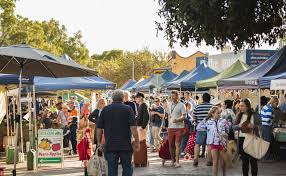
You just can’t buy quality like that. At best, if you are visiting a Farmers’ Market the produce has probably been picked the day before and packed on the truck ready to come to market in the morning.
I’m a great advocate of Farmers’ Markets, and this is about as fresh as you are going to get it without growing it yourself. For those things you use regularly that you love to eat, you just can’t beat the quality of growing your own.
If you are concerned about making sure you eat a healthy diet, then growing your own can be part of your strategy to get the best nutrition from your food.

3. Food Miles
A “food mile” is the distance food travels from the farm where it is grown or produced to the shop where you buy it, and this impacts on the environment.”
Food miles are among the fastest-growing sources of greenhouse gas emissions worldwide. Long distance transport requires enormous amounts of fossil fuel, which releases carbon dioxide and other pollutants into the atmosphere.
Keeping food cold and unbruised on that long journey requires even more fuel in the form of refrigeration and packaging for both food protection and presentation. Think of the impact of long-distance imports such as apples from New Zealand, tomatoes from Italy and Californian almonds.
Distances that food has travelled have been increasing in recent decades as import tariffs have been relaxed in many western countries and as consumers demand more and more food be made available all year round, rather than seasonally – the global market has allowed consumers to access foods grown on the other side of the world with the push of a button and some help from Fed-Ex.

4. Freshness
All those food miles, mean food is harvested many days, weeks or even months before you finally consume it.
Apples in cold store may be sold as much as 8 months after being harvested.
A certain food leaves a farm heading for the supermarket and it goes via the supermarket’s centralised warehouse, where it is weighed, packaged, labelled.
It then goes back on the truck and heads to your supermarket where it may sit for several days before you realise that your fridge is getting empty.
Compare the freshness of this food, with walking out your door – or even to your kitchen windowsill – and picking your own food. The more time a food spends in transport and on a shelf, the less nutrition it provides to you.

5. Exercise
Growing your own food can provide you with great exercise.
From shovelling compost and soil for a great upper body work out, to bending and stretching as you plant small seedlings.
Carrying baskets of home grown produce is great weight training and walking around the garden, watering or just observing your garden will provide light exercise after a long day.
You can control how much strenuous exercise you do, you can choose when you want to do hard work or light work. And best of all – its free! I always say “I don’t need a gym membership, I have a garden!”

6. Sunshine
If you live in the tropics then you probably do get enough sunshine to keep your Vitamin D supply up.
However in recent years, more and more office workers are being diagnosed with low Vitamin D. Lack of Vitamin D can cause our bones not to absorb calcium as readily and this can lead to osteoporosis and other bone disorders later in life.
20 minutes of sunshine a day will provide you with adequate Vitamin D. You don’t need to go out and get yourself a Californian Life Saver tan and, subsequently, skin melanomas.
Just 20 minutes a day on your arms is all you need. So make sure you remember your hat and sun screen when you head out to your garden.
If you garden indoors, then you will need to find other avenues for ensuring you get your Vitamin D – try taking a walk around the neighbourhood and looking at other people’s gardens, for pleasure and inspiration.

7. Satisfaction
The satisfaction of serving a meal to your family or friends from food you have grown yourself is unrivalled.
Knowing that your efforts, together with some free sunshine and a bit of water have put nutritional food on your family’s plate is a good feeling.
The achievement you feel when you harvest your first vegetable will be one you will keep coming back for time and time again.
If you, like me, need to feel a sense of achievement for your efforts, your veggies will reward you plentifully for your time and labour.

8. Household economics
Buying organic vegetables and fruit can often times be more expensive than buying those sprayed with chemicals and grown with artificial fertilizers.
By growing your own, you will be getting the best of both worlds – cheap food which is healthier for you and much more convenient. I started growing my own veggies because I wanted to, but over the years I have calculated how much I have saved each week by growing my own and it starts to add up over a few years.
As you begin to improve your soil and save your seeds, you will be growing food from year to year which requires you to purchase nothing and to use only the resources you have at hand. Those extra dollars in your purse can be saved, or used to buy other luxuries you couldn’t include before.

9. Convenience
Stepping out of your back door or over to your apartment windowsill couldn’t be much more convenient for you to obtain your food.
Compare this with the time it takes to get in the car, drive to the supermarket, select what you need, wait in line at the checkout, pack your goods into the car then drive home.
Add to this the petrol you use and the frustration you experience if they don’t have what you want or you are left waiting to be served in a long queue at the checkout.
Instead, when you grow your own food, you can pick it as and when you need it and it takes only a few minutes to do so.
Added to this is the pleasure you can have of walking through your garden on the way to pick your veggies which should decrease your stress, rather than increase your stress through driving and standing in queues.

So that’s my top 9 reasons! What are your reasons for gardening? Leave a comment below and let me know why you want to learn or why you do grow your own food.
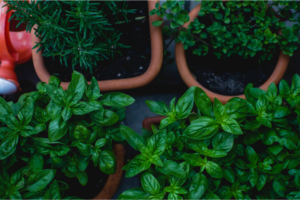
Why not try growing a pot of herbs to begin with?
Once you’ve had some success with that, you can try something else. Like anything, small regular steps will lead to great things!