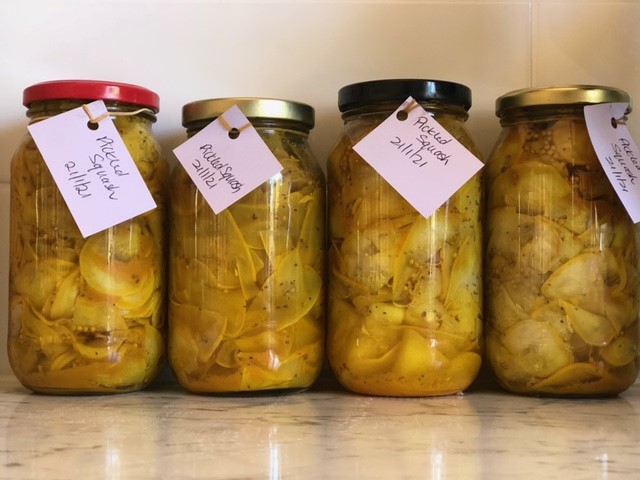
I have had so many pattypan squash from my garden this year I have been seeking out new ways of preserving them. My go to for squash and zucchini is dehydrating them, but I still have dehydrated zucchini in my pantry from last summer so I really wasn’t keen to add to that glut.

And while they are different vegetables, I find their flavour is similar and they behave similarly when cooked.
So I did a bit of digging around on Google, as you do, and tried a few different recipes, made my own amendments and adjustments for how we like to eat.
I like simple recipes that I can achieve in 5-10 minute “bites” so I can get things done in between or achieve some culinary brilliance even while Im busy doing other things.
So here’s my easy, straightforward method for preserving my garden gifts.
Pickled Pattypan Squash

A tasty pickle to serve alongside your favourite salad and sustainably farmed meat or eggs.
- 800 gm Pattypan Squash (finely sliced (use a mandolin if you have one))
- 100 gm Onion (finely sliced)
- 1 tbspn Unrefined salt
- 160 ml White vinegar (or apple cide vinegar if you prefer)
- ½ cup Raw honey
- 1¼ tspn Dried turmeric
- 1 tbspn Yellow mustard seeds
- ¾ tspn Celery seeds
Place squash, onion and salt in a mixing bowl and combine thoroughly.
Place in the fridge overnight.
Rinse the vegetable mix under cool water and drain well, making sure the salt is mostly either dissolved or removed from the mixture.
Once you’ve drained them, put them in a mixing bowl along with the mustard and celery seeds and mix them through.
Place the mix into jars. I use 2 x 500gm jars because I have a lot of these second-hand jars sitting around that are that size and they just fit in our fridge nicely.
If you want to have one big jar of pickled squash, then a 1L jar will do the trick equally well.
Put the vinegar, honey and turmeric in a saucepan and heat gently while stirring until all the honey is dissolved.
Pour this through a funnel into the jars and fill to over the top of the squash, within 1cm of the lip of the jar.
Pop the lid on so it is firm but you don’t need to overtighten it and place jar in the deepest pot you have.
Fill the pot to within 5 cm of the top of the jar, cover and bring to a gentle simmer. Maintain in the heat at around 80°C for 40 minutes to pasteurise and seal the jars.
After 40 minutes carefully check that the lid has remained firmly in position and adjust if necessary. You can leave the jar to cool in the pot. Once they have cooled down, the lid should have sucked down. (If it hasn't, the lid might be dodgy, so replace the lid and re-heat for a further 40 minutes.)
Oncethey’ve cooled, record the date when they were pickled on the jar. I let themsit in the pantry for at least a week before opening the jar – the flavourseems to mellow a little and the vinegar is not as strong. Once you open thejar, store them in the fridge.
Serve as a side along with a fresh raw salad in celebration of the goodness that you have grown in your own garden.
I have also used white sugar rather than honey in this recipe, and apple cider vinegar rather than white vinegar – it really is a matter of personal taste – both substitutes seem to work equally as well. Also I have pickled zucchinis using this recipe as well – and they are just as tasty!